RAF settlement offers: what to accept and what to fight
Before accepting an RAF settlement offer, learn what to negotiate and why getting legal advice is crucial to protecting your rights.
Published

An RAF settlement offer is the Road Accident Fund's formal written proposal to pay you a specific amount in exchange for finalizing your claim. Do not accept the first offer without independent legal review. That single sentence is the most important thing you can read on this page.
Signing a settlement agreement typically extinguishes your right to pursue the same claim again. Once you sign, the legal obligation ends. The Road Accident Fund Act 56 of 1996 governs the entire process, and Section 17 of that Act creates a statutory mechanism for future medical expenses. General damages for pain and suffering require a completed RAF4 serious injury assessment before the Fund will consider them at all. If your RAF4 is missing, that head of damages disappears from the offer entirely. Get an independent RAF-experienced attorney to review any offer before you respond.
Key takeaways
Accepting an RAF settlement offer without independent legal review is the single most common and costly mistake South African claimants make, particularly when general damages are excluded due to a missing RAF4 assessment.
| Point | Details |
|---|---|
| Never accept the first offer without review | Initial RAF offers are often conservative; independent legal review can identify missing heads of damages. |
| RAF4 is non-negotiable for general damages | Without a completed serious injury assessment, general damages are excluded from your settlement entirely. |
| Actuarial deductions reduce lump sums | Contingency deductions and a discount rate assumption (investment returns exceeding salary inflation by roughly 2.5%) lower the present-value figure you receive. |
| Payment can take up to 180 days | After acceptance, administrative processing means funds may take months to reach your attorney's trust account. |
| Use Justibly to find an LPC-registered RAF attorney | Search Justibly's directory by province and practice area, or use the free Q&A forum for a fast sanity check before signing. |
Table of Contents
- What does signing an RAF settlement agreement actually mean?
- How the RAF values each head of damages
- Why the RAF's first offer is almost always lower than it should be
- How to evaluate an RAF settlement offer: a practical checklist
- How negotiation, acceptance, and court orders work in practice
- How long does the RAF payout process actually take?
- What to do if you suspect under-settlement or attorney negligence
- How to find an LPC-registered RAF attorney who knows what they're doing
- A word of caution before you sign anything
- Justibly connects you with qualified RAF attorneys across South Africa
- Sources
- FAQ
What does signing an RAF settlement agreement actually mean?
A settlement agreement in an RAF claim is a contract. When you accept the Fund's offer and sign, the legal dispute (the lis) is resolved and the RAF's obligation to pay further compensation on that claim is extinguished. That finality is the whole point of a settlement from the Fund's perspective.
"Without prejudice" offers are a specific category. The RAF routinely makes offers marked "without prejudice," which means the offer itself cannot be used as an admission of liability in separate or ongoing proceedings. A SAFLII judgment in ZAGPJHC/2024/85 clarifies that without-prejudice offers by the RAF do not automatically amount to an admission of liability unless privilege is expressly waived or other facts clearly show a concession. Cases like Chetty v Road Accident Fund and Mertz v Road Accident Fund are distinguished in that judgment on exactly this point. The practical implication: receiving a without-prejudice offer tells you the Fund is willing to settle, not that it has conceded fault.
Courts can and do scrutinise settlements, particularly where a claimant is unrepresented or where the quantum appears inadequate. In Tosholo v Road Accident Fund (875/2023) [2025] ZASCA 21, the Supreme Court of Appeal addressed the limits of appellate intervention: courts should generally not rewrite valid settlement agreements unless there is evidence of impropriety, fraud, misrepresentation, or a breach of public policy. Contractual freedom is protected, but it is not absolute.
Section 17(4) undertaking is a separate statutory mechanism under the Road Accident Fund Act. Where future medical expenses are anticipated, the RAF may issue an open-ended undertaking to reimburse those costs as they arise and are proven, rather than paying a cash lump sum upfront. This undertaking sits alongside the settlement, not inside it, and it affects how you budget for long-term care.
How the RAF values each head of damages
The RAF settlement process separates liability from valuation. First, merits (who is liable and to what percentage) are established. Then the Fund issues a formal letter of offer covering the monetary heads of compensation. Understanding what each head covers, and what evidence supports it, is the difference between a fair offer and one that quietly omits a category worth hundreds of thousands of rands.
| Head of damages | Evidence required | Common valuation method | Frequent pitfall |
|---|---|---|---|
| Past hospital and medical expenses | Invoices, medical records, receipts | Actual costs incurred | Missing invoices or undocumented treatment |
| Future medical expenses | Specialist medico-legal reports, occupational therapy report | Present-value actuarial calculation or Section 17 undertaking | Undertaking substituted for cash without claimant understanding |
| Past loss of earnings | Payslips, employer confirmation, tax returns | Actual lost income | Gaps in employment history reduce the figure |
| Future loss of earnings | Industrial psychologist report, actuarial report | Actuarial present-value with contingency deductions | Contingency deductions applied without explanation |
| General damages (pain and suffering) | Completed RAF4 serious injury assessment | Tariff-based or judicial discretion | RAF4 absent, so head is excluded entirely |
| Loss of support (dependants) | Death certificate, dependency proof, actuarial report | Actuarial present-value of lost income stream | Dependency not formally proven |
General damages deserve special attention. The RAF4 serious injury assessment is a formal medico-legal process that determines whether your injury meets the statutory threshold for general damages. Without a completed and accepted RAF4, the Fund will not include general damages in its offer at all. Many claimants discover this only after signing, by which point it is too late.
Section 17 undertakings for future medical expenses work differently from a cash payout. The RAF gives an open-ended statutory undertaking: when you incur future medical costs related to the accident, you submit proof and the Fund reimburses you. There is no lump sum. This matters because actuarial calculations that reduce present-value figures assume future investment returns will exceed salary inflation by roughly 2.5%, which mathematically lowers the headline number you receive today.
Why the RAF's first offer is almost always lower than it should be
The Fund operates under sustained financial pressure. Recent reporting shows the RAF continues to pay significant settlements, with an average reported settlement of R348,100 and high-value awards reaching into the multi-million rand range for severe injuries. But that average masks a wide distribution, and early offers tend to cluster at the lower end.
Average reported RAF settlement: R348,100 — but individual awards for serious injuries regularly reach into the millions. The gap between an early offer and a fully evidenced claim can be substantial. (Source: Mzansi Pulse)
Several structural reasons explain why first offers are conservative.
Evidentiary gaps. If your attorney has not yet obtained a completed RAF4, a full actuarial report, or specialist medico-legal opinions, the Fund values only what is on the table. A missing industrial psychologist report means future loss of earnings is either excluded or estimated conservatively.
Actuarial adjustments. Even a well-evidenced claim is subject to contingency deductions for risks like future unemployment, illness, or mortality, plus a discount rate assumption that reduces the present value of future losses. These are legitimate actuarial tools, but the Fund's actuaries and your attorney's actuaries may apply different assumptions, producing meaningfully different numbers.
Fund incentives. The RAF's financial position creates an institutional incentive to settle early and cheaply. Legal practitioners consistently warn that the most common claimant mistake is accepting an initial offer without independent review, precisely because the Fund's early offers reflect its financial constraints as much as your actual loss.
How to evaluate an RAF settlement offer: a practical checklist
Before you respond to any offer, work through these questions. If you cannot answer all of them confidently, you need an attorney to help you.
Checklist: evaluating an RAF settlement offer
- Is the liability percentage (merits) clearly stated, and do you understand what it means for your total award?
- Does the offer cover all applicable heads of damages, or are any categories missing entirely?
- Has a completed and accepted RAF4 serious injury assessment been submitted? If general damages are absent from the offer, is that because RAF4 was not done?
- Is future medical expense covered by a cash amount or a Section 17 undertaking? Do you understand the difference?
- Has an actuarial report been obtained for future loss of earnings? What contingency deductions were applied, and are they explained?
- Does the offer include costs (attorney fees, expert fees)? Is the costs figure separately stated or bundled?
- What are the payment terms? How long after acceptance before funds reach your attorney's trust account?
- Is the settlement marked "in full and final settlement"? Does it extinguish all future claims arising from this accident?
Red flags that should prompt independent review:
- General damages are absent and no RAF4 explanation is given
- Contingency deductions exceed 20–25% without a written actuarial justification
- The Section 17 undertaking wording is vague or limits future reimbursement categories
- The offer is presented as urgent or time-limited without a clear legal basis
- Loss-of-earnings figures appear to use pre-injury income without accounting for career progression
- Costs are bundled into the settlement amount rather than separately assessed
Pro Tip: Before responding to any offer, post a brief summary of the offer terms on Justibly's free legal Q&A forum. Registered attorneys can flag obvious gaps within hours, giving you a fast sanity check before you commit to anything.
How negotiation, acceptance, and court orders work in practice
The negotiation lifecycle in an RAF claim follows a recognisable sequence, though the timing varies considerably.
- Merits phase. Liability is established, either by admission, agreement, or court order. The percentage of fault is fixed here.
- Quantum preparation. Your attorney gathers medico-legal reports, RAF4 assessment, actuarial report, and income evidence. The quality of this preparation directly determines the strength of your negotiating position.
- Letter of offer. The RAF issues a formal written offer covering each head of damages. This is the document you should never sign without review.
- Counteroffer or acceptance. Your attorney may counter with a higher figure, supported by the expert reports. Without-prejudice correspondence at this stage is privileged and cannot be used as an admission.
- Formal acceptance notice. Once both parties agree on quantum, a written acceptance notice is signed. At this point the settlement is binding as a contract.
- Making the settlement an order of court. Parties may ask the court to make the settlement an order, which gives it the force of a judgment and makes enforcement simpler. Courts may decline if the quantum appears inadequate or the evidence is insufficient, though as Tosholo confirms, appellate courts are reluctant to interfere with agreed settlements absent clear impropriety.
- Payment instruction. The RAF issues payment instructions to your attorney's trust account.
Document checklist for finalisation:
- Signed settlement agreement (clearly stating all heads and amounts)
- Section 17 undertaking wording (if future medical expenses apply), reviewed for scope
- Costs agreement or separate costs order
- Proof-of-payment terms and expected processing timeline
- Written confirmation that the settlement is in full and final settlement of all claims
Preserving your rights during negotiation means never signing anything under time pressure, always responding in writing, and keeping copies of every document exchanged. If the Fund sets an artificial deadline, your attorney can request an extension while further evidence is gathered.
How long does the RAF payout process actually take?
Realistic timelines vary, but the broad sequence looks like this.
The merits phase can take months to years depending on whether liability is disputed. Once merits are settled and quantum preparation is complete, the RAF typically takes several weeks to months to issue a formal offer. After acceptance, practical guides from RAF practitioners reference a 180-day window as a common expectation for payment to reach an attorney's trust account, though many payments arrive sooner.

Administrative delays are the norm rather than the exception. The Fund's verification processes, internal approval chains, and backlogs all add time. If payment has not arrived within the expected period, your attorney should send a formal demand letter. If that produces no result, court enforcement of a settlement order becomes the next step.
Section 17 undertakings are not immediate cash. If your settlement includes a Section 17 undertaking for future medical expenses, those costs are reimbursed only when incurred and proven. You cannot draw on the undertaking in advance. Budget accordingly, particularly if you anticipate significant ongoing treatment costs.
Administrative delays and trust account processing mean that even a smoothly accepted settlement can take months before funds clear. The RAF claim time limit under the Road Accident Fund Act is three years from the date of the accident (or from the date a minor turns 18), so the RAF time limits question is separate from the payment timeline question. Missing the claim time limit bars your claim entirely; a payment delay after acceptance is a different, more manageable problem.
What to do if you suspect under-settlement or attorney negligence
Once a valid settlement agreement is signed, setting it aside is genuinely difficult. Courts will only intervene in exceptional circumstances: fraud, material misrepresentation, duress, or a procedural irregularity that renders the agreement void. The appellate guidance in ZACC/2024/4 reinforces that courts protect contractual freedom and will not rewrite a settlement simply because one party later considers it inadequate.
That said, if you believe your attorney accepted a low offer without your informed consent, or failed to obtain the evidence needed to support a proper valuation, you have specific remedies.
- Seek independent legal review immediately. A second attorney can assess whether the settlement was within the range a competent practitioner would have accepted, and whether any grounds exist to challenge it.
- Request your full file and fee records. You are entitled to your file. Review it for the expert reports obtained, the correspondence with the RAF, and the basis on which the offer was recommended.
- Assess whether attorney conduct meets the professional negligence threshold. A professional negligence claim against an attorney requires proof that the attorney's conduct fell below the standard of a reasonably competent practitioner and that this directly caused your financial loss. This is a high bar.
- Engage the LPIIF (Legal Practitioners' Indemnity Insurance Fund). The LPIIF provides indemnity cover for attorneys in South Africa. If your attorney's negligence caused you a quantifiable loss, a claim against the LPIIF or a disciplinary complaint to the Legal Practice Council may be available. Evidence of causation is critical: you must show not just that the settlement was low, but that a competent attorney would have achieved a materially better outcome.
As Tosholo v Road Accident Fund illustrates, appellate courts are reluctant to disturb agreed settlements, which means the practical remedy for under-settlement often lies in a professional negligence action rather than reopening the RAF claim itself.
How to find an LPC-registered RAF attorney who knows what they're doing
Not every personal injury attorney has the specific experience that RAF claims demand. RAF4 assessments, actuarial collaboration, Section 17 undertaking drafting, and without-prejudice negotiation are specialist skills. Here is what to look for.
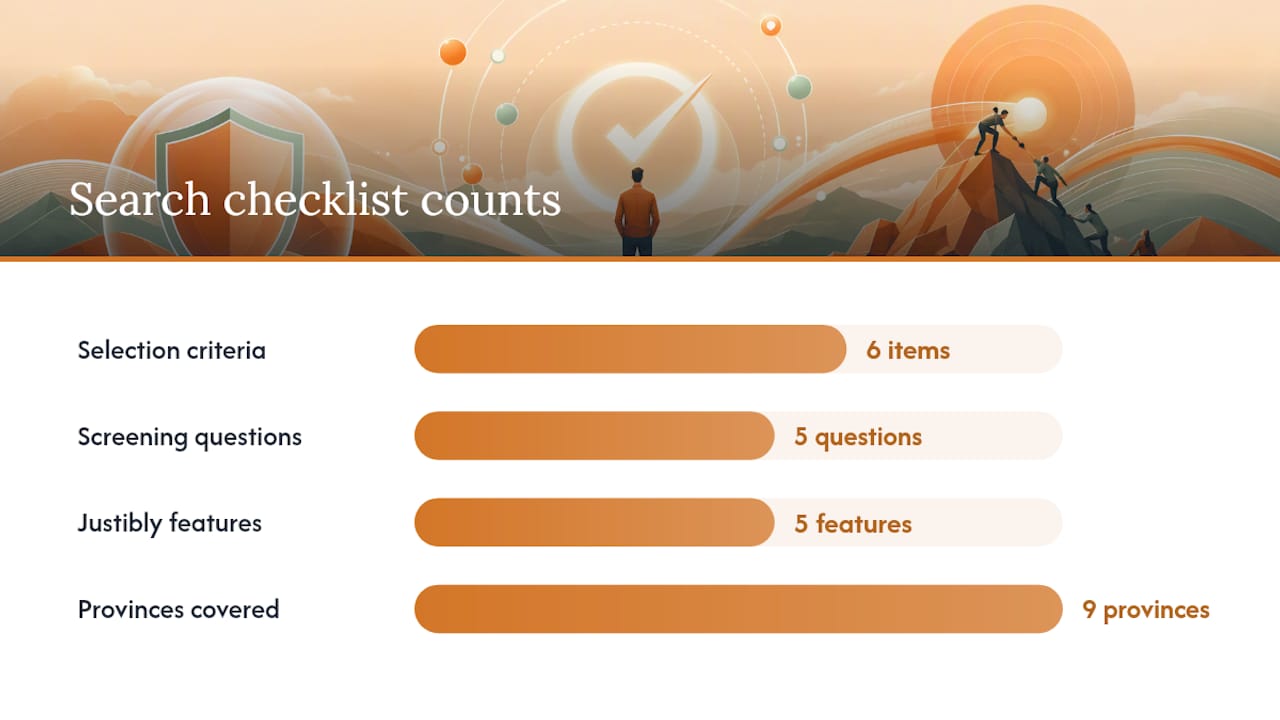
Selection criteria:
- Confirmed LPC registration (verify on the Legal Practice Council's public register)
- Demonstrable RAF and personal injury experience, not just general litigation
- Familiarity with RAF4 serious injury assessment processes and the medico-legal experts they work with
- Clear, written fee structure (contingency fee agreements in RAF matters are regulated)
- Verifiable client reviews or referrals from other legal professionals
- Experience coordinating with actuaries and industrial psychologists for quantum preparation
Using Justibly to find the right attorney:
Justibly's directory lists RAF claims attorneys across all nine South African provinces, with profiles drawn from LPC registration data rather than pay-to-rank placement. You can filter by practice area and location, read attorney profiles, and book a consultation directly. For a fast second opinion before signing anything, the free Q&A forum connects you with registered attorneys who can flag obvious problems within hours.
Questions to ask in a 15-minute screening call:
- Have you handled RAF claims involving RAF4 serious injury assessments? How many?
- Do you work with your own actuaries and industrial psychologists, or do you rely on the claimant to source them?
- How do you handle Section 17 undertaking wording in settlements?
- What is your fee structure, and is it in writing?
- Can you give me a realistic range for how long my claim might take from this point?
Pro Tip: Ask the attorney to name one thing they would check first in your specific offer. A competent RAF attorney will immediately ask about the RAF4 status and the actuarial assumptions. A vague answer is a signal to keep looking.
Justibly's directory is a connection tool, not a recommendation or guarantee of outcome. Verify credentials independently and confirm LPC registration before engaging any attorney.
A word of caution before you sign anything
The emotional pull of a settlement offer is real. After months or years of a claim, a concrete number on paper feels like relief. That feeling is exactly what makes early, low offers effective from the Fund's perspective.
The claimants who fare worst are those who sign quickly, without understanding what they are giving up. General damages excluded because RAF4 was never done. Future medical costs covered by a vaguely worded undertaking that later proves difficult to enforce. Loss of earnings calculated on a base salary that ignores career trajectory. These are not hypothetical risks. They appear regularly in the case law and in practitioner commentary.
Conservative decision-making in RAF matters means: get an independent valuation before you respond, understand every line of the offer, and treat any time pressure as a red flag rather than a reason to hurry. The Justibly Q&A forum and the RAF claims attorney directory exist precisely for this moment, when you need a fast, qualified check before committing.
Justibly connects you with qualified RAF attorneys across South Africa
Receiving an RAF settlement offer without legal support is one of the most common and costly mistakes South African claimants make. Justibly gives you direct access to LPC-registered RAF attorneys searchable by province and practice area, with profiles built from verified Legal Practice Council data rather than advertising spend.
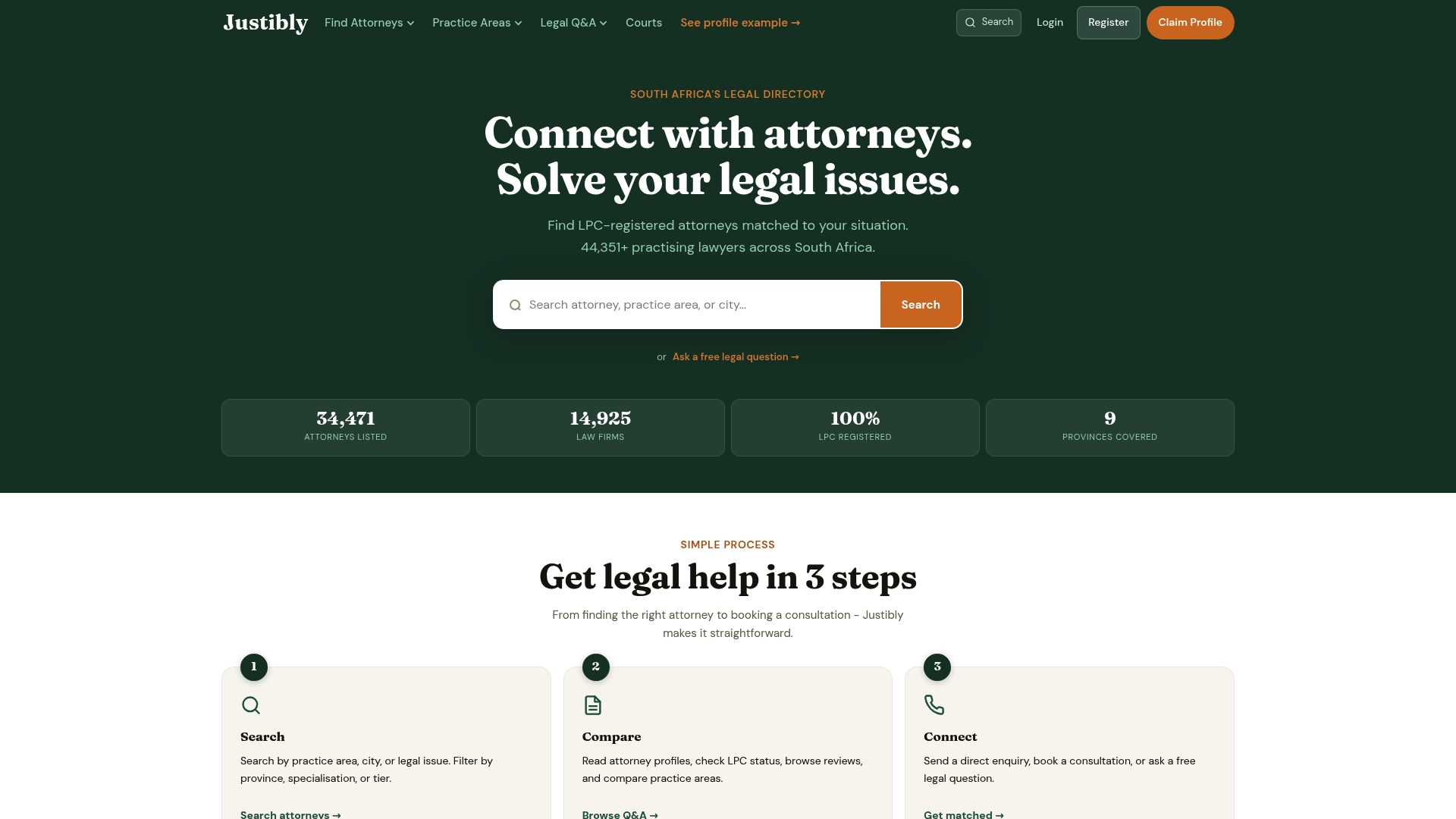
Three steps to use Justibly right now: search the directory for RAF claims attorneys in your province, review attorney profiles and credentials, then book a consultation or post your question on the free Q&A forum for a fast second opinion before you sign anything. Justibly is a directory and does not provide legal advice directly. Individual attorney outcomes vary. Start your search at Justibly and get a qualified eye on your offer before it becomes final.
Sources
- RAF Merits Offer - Expert Forum
- RAF Claims Still Paying Out Millions Despite Financial Crisis | Mzansi Pulse
- ZAGPJHC/2024/85 judgment (SAFLII)
- Why was my MVA claim lower than expected? | Kramer Actuaries
This article is general information, not a substitute for advice from a qualified lawyer. Consult a qualified legal professional about your own circumstances before acting on anything here.
FAQ
Should I accept my first RAF settlement offer?
No. Initial RAF offers are frequently conservative, often because key evidence like the RAF4 serious injury assessment or a full actuarial report is missing. Have an independent RAF-experienced attorney review the offer before you respond.
How long does the RAF take to pay after a settlement is accepted?
Payment typically reaches your attorney's trust account within a few months of acceptance, with practitioners commonly referencing a 180-day window as a realistic expectation. Administrative verification and internal RAF processing are the main sources of delay.
What is the RAF claim time limit in South Africa?
Under the Road Accident Fund Act 56 of 1996, you generally have three years from the date of the accident to lodge a claim, or three years from the date a minor turns 18. Missing this deadline bars your claim entirely.
What is an RAF4 serious injury assessment?
The RAF4 is a formal medico-legal assessment that determines whether your injury meets the statutory threshold for general damages (pain and suffering). Without a completed and accepted RAF4, the RAF will not include general damages in its settlement offer.
Can a signed RAF settlement agreement be set aside?
Rarely. Courts will only intervene in exceptional circumstances such as fraud, material misrepresentation, or duress. As confirmed in Tosholo v Road Accident Fund, appellate courts are reluctant to disturb agreed settlements, making independent review before signing the only reliable protection.
Recommended
By the Justibly editorial team
Published
General legal information for South Africa, checked against the Legal Practice Act, the relevant court rules and the Legal Practice Council roll. It is not legal advice and does not create an attorney-client relationship. For advice on your situation, consult an admitted attorney.
How we research and review · How the Trust Score works · Report an error