Don't Gamble: 4 Steps to Choose a Lawyer in South Africa
South Africa: choose a lawyer with a four step checklist. Match specialist, verify LPC and FFC, and get fees agreed in writing.
Published

Match the lawyer's specialism to your exact matter first, then verify everything else. Check the attorney's registration on the Legal Practice Council database, confirm they hold a Fidelity Fund Certificate if they'll handle your money, and get a written fee agreement before you pay anything. Skip these steps and you're gambling with your case, not just your budget.
TL;DR:
- Verifying the lawyer's registration on the LPC database and confirming their Fidelity Fund Certificate is essential if they will handle trust money; do not skip this step.
- Ensure the lawyer has recent, relevant experience in your specific legal matter, especially in specialized fields like criminal defense or family law, rather than relying solely on general practice.
- Ask detailed questions during the first consultation about who will work on your case, expected outcomes, fees, potential conflicts, and communication methods to assess trustworthiness and suitability.
- Confirm fee structures and request a written fee agreement specifying scope, costs, disbursements, and termination terms before making any payments or commitments.
- Use a verified attorney directory that pulls LPC data directly to efficiently vet potential lawyers by practice area and registration status, saving time and reducing risk.
Table of Contents
- What to look for when choosing a lawyer
- Where should you start looking for a lawyer?
- What questions should you ask in the first consultation?
- How do lawyer fees and fee agreements work?
- What are the warning signs of an untrustworthy lawyer?
- What happens after you sign with a lawyer?
- Why a verified directory shortens the vetting process
- An editorial checklist for choosing a lawyer well
- Get matched with a verified attorney through Justibly
- Where to verify registration and fee rules yourself
- Sources
- FAQ
What to look for when choosing a lawyer
Choosing a lawyer well comes down to matching verifiable signals against your actual problem. A friendly manner and a nice office mean nothing if the attorney has never handled a case like yours.
Start with experience in the exact practice area you need. A property transfer and a labour dispute require completely different skill sets, and an attorney who mostly does conveyancing will not give you the sharpest advice on an unfair dismissal claim. Ask directly: "How many matters like mine have you closed in the past two years, and what happened?"
Specialisation matters more in some fields than others, such as in criminal defence, where deep, narrow experience is crucial. Criminal defence, family law, and labour disputes tend to reward deep, narrow experience because procedure and precedent shift constantly. For simpler matters, such as drafting a basic will or reviewing a lease, a competent generalist attorney can do the job just as well and often at a lower cost.
Communication style is a trust signal people underrate. Find out who will actually handle your file, not just who signs the letters.
- Ask whether a partner, associate, or paralegal will do the day-to-day work
- Confirm how quickly they typically respond to calls and emails
- Check whether the attorney is registered with the LPC and, where they'll hold your money, whether they carry a current Fidelity Fund Certificate
- Request a written fee agreement before any money changes hands
- Ask for a reference or a similar case example you can sanity check
An attorney who resists these questions or gets defensive about basic verification is telling you something useful before you've even hired them.
Where should you start looking for a lawyer?
The best starting point depends on how urgent and how specialised your matter is. A mix of referrals and regulatory verification beats relying on either one alone.
Personal referrals from friends, family, or colleagues who've dealt with a similar issue carry real weight, but vet them properly. Ask what the referrer actually paid, how responsive the attorney was, and whether the outcome matched what was promised at the start.
Professional referrals work well too. Accountants, estate agents, and other attorneys often know who genuinely specialises in a given area, since they refer clients regularly and see the results.
For a verified starting point, the LPC's public practitioner search lets you confirm any name before you even pick up the phone.
- Search the LPC's practitioner database and note the attorney's LPC number, province, and practising status
- Browse a specialist directory that surfaces LPC numbers and practice-area filters directly, rather than burying that detail
- Consider legal aid, university law clinics, or community advice offices if cost is the main barrier
- Cross check the physical address and contact details listed match what the attorney gives you directly
- Confirm the FFC status where the matter involves trust money, such as a property sale or deceased estate
Justibly's attorney directory pulls from LPC data directly, so the practice area and location filters you'll find for attorneys in Cape Town or attorneys in Johannesburg reflect actual registration status rather than a paid ranking.
What questions should you ask in the first consultation?
A first consultation is a two-way interview, not a formality. Walking in with a fixed set of questions keeps the meeting focused and lets you compare candidates on equal terms.
- Who handles the work? Ask if it's the attorney in front of you or a junior colleague, and how many similar matters they've closed.
- What's the realistic outcome? Push past vague reassurance and ask for a likely timeline and the probable range of results.
- What will this cost? Get the fee model, billing frequency, likely disbursements, and confirmation that you'll receive a written fee agreement.
- Any conflicts of interest? Ask whether they've represented the other party before, and whether they'll bring in an advocate for court work.
- How will we communicate? Settle on a channel and expected response time upfront, so nothing gets lost later.
Bring identity documents, correspondence, contracts, and any paperwork tied to your matter. Turning up with a disorganised folder wastes billable time and makes it harder for the attorney to give you a straight answer. A well-prepared first meeting also tells you a lot about how the attorney handles pressure, since a good one will help you sort through the mess rather than getting irritated by it.
How do lawyer fees and fee agreements work?
Fee structures vary more than most people expect, and the wrong one for your situation can cost you far more than a slightly higher hourly rate.
Hourly billing suits complex, unpredictable matters like litigation, where nobody can forecast total hours upfront. Fixed fees work for defined tasks such as drafting a contract or handling an uncontested divorce. Retainers make sense for ongoing business advice. Contingency arrangements exist in limited circumstances in South Africa but come with strict rules, so ask specifically how any conditional fee would work in your case.
Under the Legal Practice Act 28 of 2014, attorneys must give clients a written fee agreement. That document should spell out:
- The scope of work covered
- The fee model and hourly rate or fixed amount
- A realistic cost estimate for the full matter
- Likely disbursements, such as court fees or expert costs
- Termination terms if either side wants to end the relationship
Ask for a sample invoice and a total-cost estimate before you commit. If trust money is involved, confirm the Fidelity Fund Certificate is current before transferring a cent.
What are the warning signs of an untrustworthy lawyer?
Most problem attorneys share the same handful of tells, and they usually show up before you've paid anything.
Walk away from anyone who guarantees a specific outcome. No honest attorney can promise a result in a contested matter, and a guarantee usually signals overselling rather than confidence. Be equally wary of an attorney who resists putting anything in writing, pressures you to pay into a personal account rather than a trust account, or refuses to give you their LPC number when asked.
- Guarantees a win or a specific settlement figure
- Won't provide a written mandate or fee agreement
- Asks for payment into a personal bank account
- Refuses or delays sharing their LPC number
- Has an inactive or restricted status on the LPC practitioner search
It is a criminal offence in South Africa to practise as an attorney without LPC registration, so a refusal to confirm that number is not a minor inconvenience. If a search turns up a disciplinary record, ask the attorney to explain it directly, and escalate to the LPC if the explanation doesn't hold up. When sharing sensitive documents or transferring funds, confirm bank details by phone through a number you sourced independently, never one only supplied by email.
What happens after you sign with a lawyer?
The first two or three months set the tone for the whole relationship, and a few habits early on save a lot of frustration later.
- Read the engagement letter closely. It should restate scope, fees, and communication terms from your consultation. Query anything that doesn't match what was discussed.
- Agree on a reporting rhythm. Weekly updates suit active litigation; monthly check ins are fine for slower administrative matters.
- Keep your own file. Track key dates, documents sent, and decisions made in a simple timeline, separate from what the attorney keeps.
- Know how to switch attorneys. You're entitled to give notice, request a final invoice, and have your file transferred to a new practitioner if the relationship isn't working.
Pro Tip: Ask your attorney to confirm major milestones in writing, even briefly by email. A two-line message after a court date or settlement offer creates a paper trail that protects you if there's ever a dispute about what was agreed.
Why a verified directory shortens the vetting process
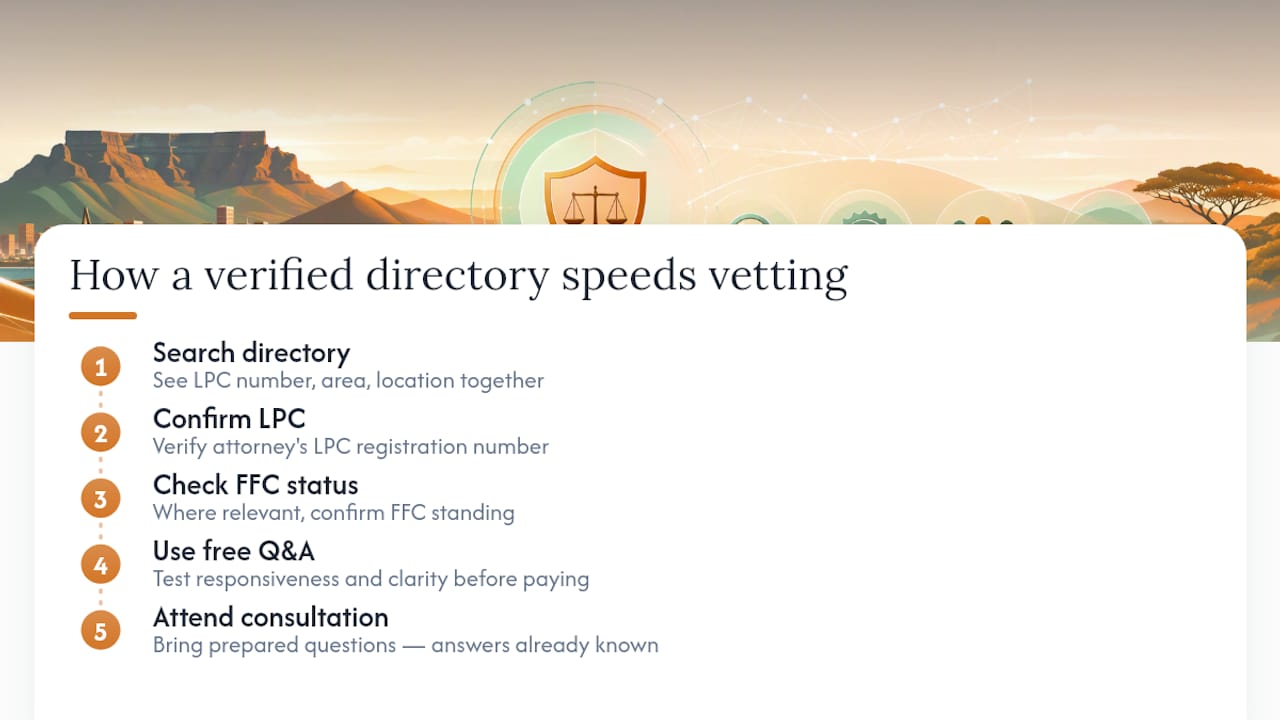
Running these checks one by one across phone calls and separate websites eats hours. A directory that pulls straight from LPC data collapses that into one search: you see the LPC number, practice area, and location together, and there's no paid placement pushing a less suitable attorney above a better match.
Justibly lists a very large number of practising attorneys across all nine provinces, with listings reflecting actual LPC data rather than a pay-to-rank scheme. Its free Q&A forum also lets you test an attorney's responsiveness and clarity before you ever book a paid consultation, a rough proxy for how they'll communicate once you're a paying client. Search, confirm the LPC number, check FFC status where relevant, then walk into your consultation with the questions above already answered.
An editorial checklist for choosing a lawyer well
Boil it down to four steps: match the specialism to your matter, verify LPC registration and FFC status, confirm fees and communication expectations in writing, then sign a proper mandate. Skip any one of those and you're exposed somewhere.
The mistake I see most often is hiring on price alone, especially for anything involving property, deceased estates, or contested settlements. A cheap quote with no written fee agreement almost always ends up more expensive once disbursements and scope disputes creep in. The attorneys worth paying more for are usually the ones who can tell you, specifically, what similar cases have looked like and what could go wrong in yours. That specificity is the real signal, far more than a polished website or a big office.
— Nkosi
Get matched with a verified attorney through Justibly
Justibly is the alternative to guessing your way through a Google search or a cousin's vague recommendation: every listed attorney reflects real LPC registration data, filterable by practice area and province, with no paid placement pushing a weaker match to the top.
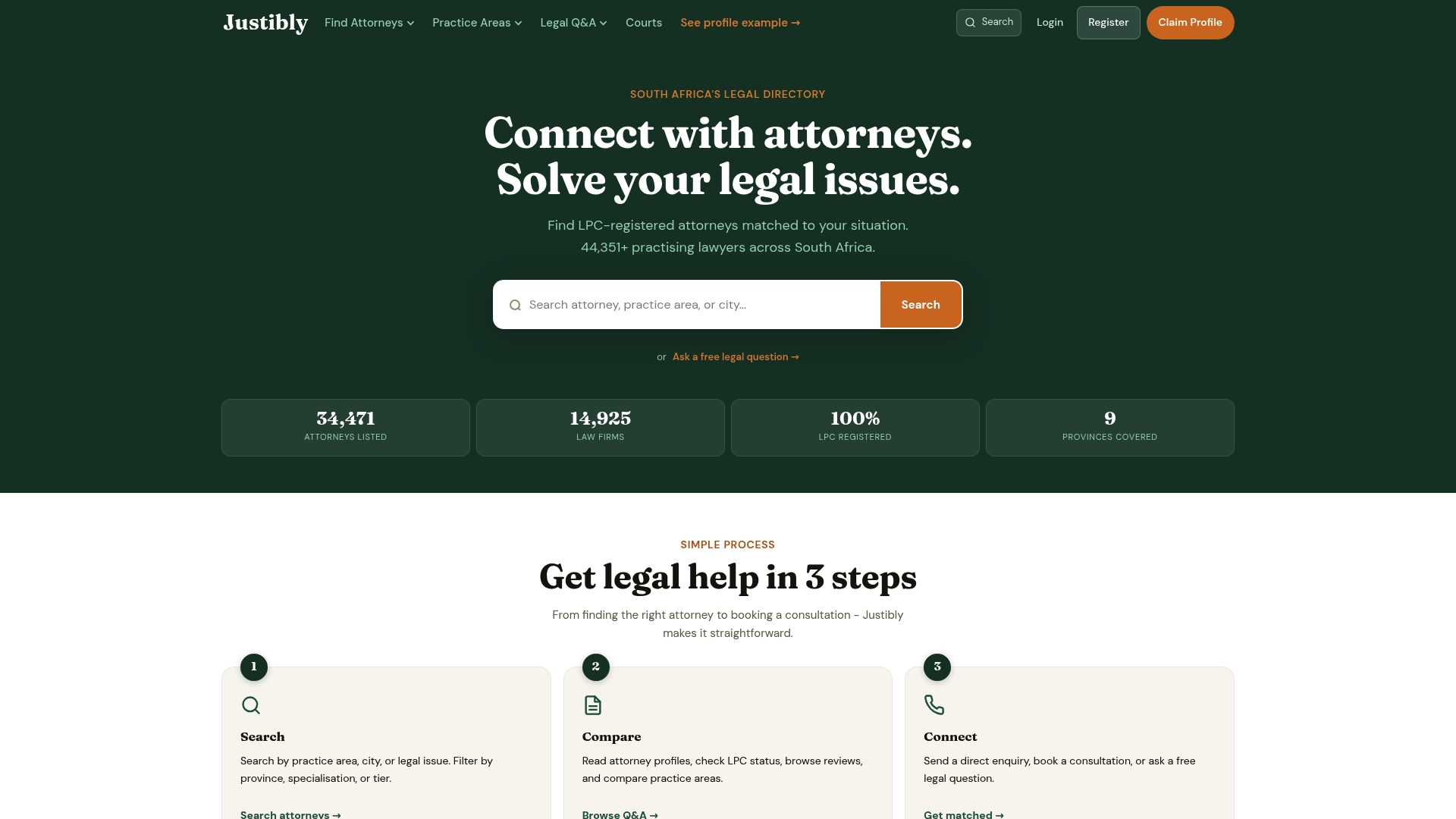
Run a search by your specific matter, whether that's a family law dispute, a criminal defence matter, or a labour law issue, and you'll see LPC numbers and location details upfront rather than buried in a contact page. Not sure where to start, or want a second opinion before you commit to a consultation fee? Post your question on the free Q&A forum and get a response from a registered attorney first. Browse the legal guides for your matter type, then head to Justibly's directory to shortlist attorneys near you and book that first consultation.
Where to verify registration and fee rules yourself
Don't take anyone's word for these details, including this article's. Each of the following sources lets you confirm the rules directly.
- Legal Practice Council for the regulator's official public guidance and FAQ pages
- LPC practitioner search to confirm registration, province, and practising status
- Legal Practice Act factsheet from the Department of Justice for the statutory fee agreement requirement
- LSSA's guidance on checking registration for a step-by-step verification walkthrough
This article is general information, not a substitute for advice from a qualified lawyer. Consult a qualified legal professional about your own circumstances before acting on anything here.
Sources
- How to check whether a legal practitioner is registered (LSSA page linking LPC tools)
- Legal Practice Act factsheet (Department of Justice)
- Search practitioners - Legal Practice Council
- Five tips to optimise your first consultation with an attorney - Werksmans
FAQ
How much does a lawyer cost in South Africa?
Costs vary widely by fee model and matter type: hourly rates, fixed fees for defined tasks, or retainers for ongoing advice. Ask for a written estimate and sample invoice during your first consultation rather than relying on a general figure.
What are red flags for lawyers?
Guaranteeing a specific outcome, refusing to provide an LPC number, resisting a written fee agreement, or asking for payment into a personal account are all warning signs. Any of these should send you back to the LPC practitioner search before you proceed.
Why does specialisation matter when choosing a lawyer?
Fields like criminal defence, family law, and labour disputes involve fast-moving procedure and precedent, so recent, direct experience in that exact area predicts a better outcome than general practice experience alone.
What should you not tell an attorney?
Be honest with your own attorney. Attorney client confidentiality protects what you disclose, so withholding facts out of fear usually backfires and weakens your own case when the full picture surfaces later.
How do you verify a lawyer is legitimate?
Search their name on the LPC's public register to confirm active registration, and ask for their Fidelity Fund Certificate if they'll handle any of your money. A directory like Justibly surfaces this LPC data directly within each listing.
Recommended
By the Justibly editorial team
Published
General legal information for South Africa, checked against the Legal Practice Act, the relevant court rules and the Legal Practice Council roll. It is not legal advice and does not create an attorney-client relationship. For advice on your situation, consult an admitted attorney.
How we research and review · How the Trust Score works · Report an error