Voetstoots clause: what South African buyers and sellers must know
Learn how the voetstoots clause affects property sales in South Africa. Understand your risks and rights as a buyer or seller to make informed decisions.
Published

A voetstoots clause still shifts the risk of unknown latent defects onto the buyer in a private, once-off property sale. It does not survive when the Consumer Protection Act applies, which happens whenever the seller is a developer, an estate agent acting as principal, or anyone else selling in the ordinary course of business. It also never protects a seller who knew about a defect and hid it.
That is the entire rule in one breath. The detail is where most disputes actually happen.
- Private, once-off sale: voetstoots usually stands, and the buyer carries the risk of defects nobody knew about.
- CPA-covered sale (developer, business seller, some agent-led deals): sections 55 and 56 imply a warranty of quality that overrides voetstoots.
- Fraudulent concealment, in any sale: voetstoots offers zero protection, and the actio empti remains available.
- Not sure which category you fall into? A property attorney found through Justibly can read your offer to purchase and tell you in minutes.
Key Takeaways
A voetstoots clause protects private sellers from unknown latent defects but collapses under the CPA's implied warranty of quality and against any seller who knowingly concealed a defect.
| Point | Details |
|---|---|
| Private sales differ from CPA sales | Voetstoots usually holds in a private, once-off sale but not against a developer or business seller under sections 55 and 56. |
| Patent defects are the buyer's problem | Anything visible on a reasonable inspection falls outside voetstoots protection entirely. |
| Concealment defeats the clause | Courts strip voetstoots protection the moment a buyer proves the seller knew of and hid a defect. |
| Disclosure annexures change outcomes | A signed, initialed list of known defects converts a disputed issue into an accepted one. |
| Get a professional read on your contract | A property attorney found through Justibly can confirm whether your sale is CPA-covered before you sign. |
This article is general information, not a substitute for advice from a qualified lawyer. Consult a qualified legal professional about your own circumstances before acting on anything here.
Table of Contents
- What does a voetstoots clause actually mean?
- Where does voetstoots come from legally?
- Latent defects vs patent defects: why the label changes everything
- Does a voetstoots clause survive the Consumer Protection Act?
- What this means day to day for buyers and sellers
- Drafting a voetstoots clause that actually holds up
- A step-by-step checklist before you sign
- Why this clause deserves more attention than it gets
- Get the right legal advice before you sign
- Sources
- FAQ
What does a voetstoots clause actually mean?
"Voetstoots" is Afrikaans for "with the foot against it," roughly "as is, kicked as it stands." In law it means the seller makes no promises about the property's condition and disclaims liability for defects the seller did not know about. It is a common-law risk allocation tool, not a licence to hide problems.
A standard clause reads close to this:
Plain English: what you see is what you get, and if something breaks that neither of you knew about, that is your problem, not the seller's.
The clause has real limits:
- It excludes liability for latent defects unknown to the seller at the time of sale.
- It does not excuse patent defects visible on a reasonable inspection.
- It does not protect a seller who knew about a defect and stayed quiet, as confirmed in the University of Pretoria's analysis of voetstoots.
Where does voetstoots come from legally?
Voetstoots developed under Roman-Dutch common law through two remedies: the actio empti (a buyer's contractual claim for damages or a reduction in price) and the aedilitian actions, older remedies aimed specifically at defects in the thing sold. Courts have consistently read voetstoots narrowly, resolving genuine ambiguity against the party trying to escape liability, which is usually the seller.
Case law has drawn firm lines:
- Appellate rulings confirm voetstoots collapses entirely once a buyer proves the seller knew of a defect and concealed it, as set out in a 2008 Supreme Court of Appeal judgment.
- High Court decisions have tested how far "knowledge" needs to be proven, with judgments available through SAFLII's Western Cape records giving a sense of the evidentiary bar.
- Courts weigh circumstantial evidence, such as prior repair invoices or agent correspondence, heavily in these disputes.
| Remedy | What it requires the buyer to prove |
|---|---|
| Actio empti | A latent defect existed at the time of sale and reduced the property's value |
| Aedilitian action | The defect was material enough to justify cancellation or a price reduction |
| Fraud-based claim | The seller had actual knowledge of the defect and deliberately concealed it |
Latent defects vs patent defects: why the label changes everything
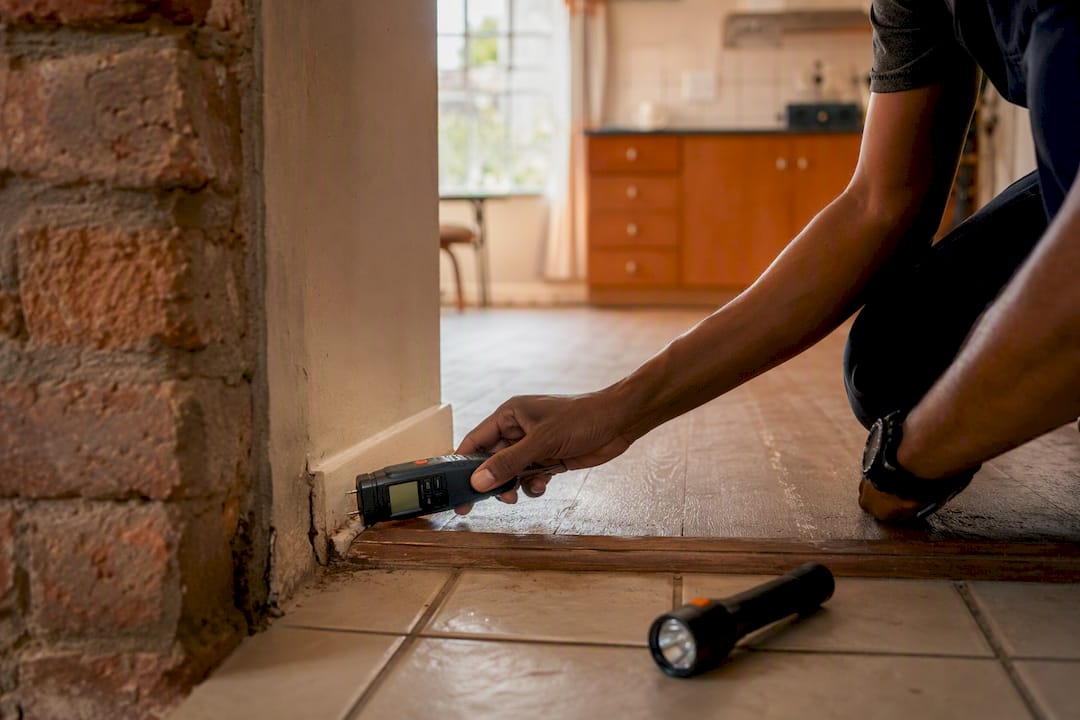
A patent defect is one a reasonably observant buyer would spot on a normal viewing: a cracked windowpane, a missing tile, a door that does not close. Voetstoots was never designed to cover these. You saw the roof sag, you signed anyway, that is on you.
A latent defect is hidden. It is the geyser that bursts three weeks after transfer, the roof truss eaten by borer beetle behind a ceiling board, or rising damp masked by a fresh coat of paint. This is exactly what voetstoots targets, provided the seller genuinely did not know about it.
- Patent: broken pool pump, visible roof damage, stained carpets.
- Latent: leaking underground pipe, faulty electrical wiring inside walls, foundation cracks under flooring.
Buyers carry the burden of inspecting for patent defects and rarely succeed against voetstoots unless they can show the seller both knew of a latent problem and hid it, according to VDM Law's overview of defect categories.
Pro Tip: A walkthrough with a torch and a moisture meter catches maybe half of what matters. For anything structural, electrical, or related to roofing, pay for a qualified inspector before you sign, not after.
Does a voetstoots clause survive the Consumer Protection Act?
Often not, and this is the single biggest shift in South African property law over the past decade. The Consumer Protection Act inserts an implied warranty of quality under section 55, meaning goods (immovable property included) must be reasonably suitable for their purpose and free of defects. Section 56 gives consumers a six-month window to demand repair, replacement, or a refund once a defect surfaces.
The decisive question is whether the seller sold "in the ordinary course of business." Developers building for sale, property investment companies, and in some structures estate agents acting as principal all fall inside that test, and none of them can hide behind voetstoots. Legal commentary from the University of Pretoria's De Jure analysis confirms this reading and warns that section 4's interpretation principle resolves any ambiguous contract wording in the consumer's favour, not the seller's.
Three groups sit outside CPA protection:
- Private, once-off sellers disposing of their own home, who are not "suppliers" under the Act.
- Juristic persons above the CPA's asset or turnover threshold, excluded under section 5(2), as confirmed in government guidance on the Act.
- Buyers who received express written disclosure of a specific defect and accepted the property in that condition anyway, under section 55(6).
Section 51 also matters here: a contract term that tries to strip a consumer of CPA rights is void. A voetstoots clause bolted onto a developer's sale agreement is largely unenforceable paper, regardless of how confidently it is worded.
What this means day to day for buyers and sellers
Buyers should treat every viewing as evidence-gathering. Ask direct questions about damp, past leaks, renovations, and roof age, and get answers in writing wherever possible. Insert suspensive conditions tied to inspection results, and commission a professional report on the roof, plumbing, and electrics before the offer becomes unconditional.
Sellers protect themselves through disclosure, not silence. Complete the Property Practitioners Act disclosure form honestly when an agent is involved, since what you write there becomes strong evidence of what the buyer knew and accepted, per MJ Kotze Inc's analysis of the PPA disclosure duty.
Watch for these red flags before you sign anything:
- Fresh paint concentrated in one room, especially near ceilings or skirting boards.
- A seller who is unusually vague about a recent renovation's scope.
- Inconsistent paperwork between the disclosure form and what the agent verbally describes.
If a dispute lands in court, remedies split cleanly by fault:
- Buyer's remedies include the actio empti for damages, cancellation for a material latent defect, or a price reduction where the property was overvalued at the defect's expense.
- Seller's defence rests on proving genuine ignorance of the defect at the time of sale, supported by maintenance records or a clean prior inspection report.
Drafting a voetstoots clause that actually holds up
A clause is only as strong as the disclosure sitting next to it. Pair the standard wording with a signed annexure listing every known issue, structural, electrical, plumbing, pest, and any unapproved building work.

Once both parties initial that annexure, a disclosed defect becomes an accepted one. The buyer cannot later claim damages for something the seller flagged in writing and the buyer signed off on.
Drafting rules worth following:
- Never rely on a blanket voetstoots clause to cover a defect you actually know about; write it down instead.
- Record verbal answers from viewings in writing, even a follow-up email confirming what was said.
- Initial every page of the annexure, not just the signature line, so nothing can be added later.
- Avoid vague catch-all phrases like "sold with all faults, known or unknown" without a specific list attached; courts read these skeptically.
A step-by-step checklist before you sign
- View twice, ask hard questions. Return in different light or weather, and ask specifically about leaks, damp, structural work, and pest history.
- Insert suspensive conditions. Make the offer conditional on a satisfactory inspection report within a set number of days.
- Commission professional reports. A qualified inspector covering roof, plumbing, electrical, and structural elements costs far less than a burst geyser after transfer.
- Demand a signed defect annexure. Get every known issue in writing and initialed by both parties.
- Confirm whether the CPA applies. If the seller is a developer or business, you likely have section 55 and 56 rights regardless of what the voetstoots clause says.
- Keep the disclosure form. If an agent handled the sale, the Property Practitioners Act disclosure form is your paper trail if anything surfaces later.
Pro Tip: Keep a copy of the signed PPA disclosure form even after transfer. If a hidden defect surfaces in month four, that form is often the strongest evidence of what the seller actually knew.
Why this clause deserves more attention than it gets
Most disputes over a voetstoots clause aren't really about the clause. They're about what got left unsaid during the sale. A buyer who skips the professional inspection because the agent seemed trustworthy, or a seller who "forgets" to mention last year's roof leak, both end up in the same place: a legal fight that a five-minute disclosure conversation could have avoided.
What gets missed is that the CPA didn't kill voetstoots. It narrowed it to where it actually belongs, which is private sales between individuals who genuinely don't know more than the buyer does. Treating every sale as CPA-covered, or every clause as bulletproof, is where people get hurt. When the facts get murky, a property attorney sourced through Justibly can tell you within one conversation which side of that line your deal sits on.
Get the right legal advice before you sign
Reading about voetstoots is useful. Having someone check your specific offer to purchase is what actually protects you. Justibly's directory of property and conveyancing attorneys lists only LPC-registered lawyers across all nine provinces, with no pay-to-rank listings distorting who shows up first.

If your question is small, start with the free Legal Q&A forum, where registered attorneys answer property questions directly. If you need someone to review a clause, negotiate a disclosure dispute, or represent you in a claim, search Justibly's directory by province and practice area and book a consultation with an attorney who handles property matters specifically.
Sources
- Is the sale of immovable property, voetstoots, the law of legend? (University of Pretoria law review extract)
- Chapter extract on voetstoots vs CPA (De Jure / University of Pretoria)
- Voetstoots and defect disclosure in South African property sales | MJ Kotze Inc
- Relevant appellate case law (SCA 2008) on voetstoots (saflii)
FAQ
Are voetstoots clauses still valid in South Africa?
Yes, in private once-off sales between individuals. They are largely unenforceable where the seller sells in the ordinary course of business, because sections 55 and 56 of the CPA override them.
Can you give an example of a voetstoots clause?
A standard version reads: "The property is sold voetstoots, in the condition in which it stands, and the seller shall not be liable for any defects, whether latent or patent." Pairing it with a signed defect annexure makes it far stronger in practice.
Can a car be sold voetstoots?
Yes, voetstoots applies to movable property like vehicles the same way it applies to immovable property: it covers unknown latent defects but not defects the seller knew about, and CPA protections still apply if the seller is a dealer selling in the ordinary course of business.
How do you avoid problems with a voetstoots clause?
Get a professional inspection before signing, insist on a signed defect disclosure annexure, and confirm whether the CPA applies to your specific seller. If anything feels unclear, a property attorney through Justibly's directory can review the contract before you commit.
Recommended
By the Justibly editorial team
Published
General legal information for South Africa, checked against the Legal Practice Act, the relevant court rules and the Legal Practice Council roll. It is not legal advice and does not create an attorney-client relationship. For advice on your situation, consult an admitted attorney.
How we research and review · How the Trust Score works · Report an error